I get a strange thrill when invasive species make the national press, mainly
because it makes me glad that the issues they cause are receiving the attention
they deserve.
A while ago, I blogged about Japanese Knotweed in my hometown of Hemel Hempstead, and how essentially its a beastly plant that can grow through
concrete, causing great deals of damage, and prove very difficult to eradicate.
This week, the UK has now stepped up its efforts to counter this powerful
plant, with the Home Office announcing that if you fail to control Japanese
Knotweed in your residential area, you can be fined up to £2500. Failure to
control Japanese Knotweed is to be considered 'antisocial behaviour' and will result
in an on the spot penalty of £100. Organisations could be fined up to £20,000.
And I think this is fantastic. It is definitely bad form to have a harmful
plant growing in your garden and do nothing about it. The new guidance is
especially for residential areas, with the aim that people will report their
neighbours if Japanese Knotweed is invading their garden
Never before in the UK have plants been specifically considered to be part
of antisocial behaviour guidance, which we normally associate with playing
music too loud or intimidating people within the community.
Japanese Knotweed clearance in the UK has been extremely costly. Clearing
just 10 acres of the Olympic Park cost £70 million, and £1.25 billion has been
spent in total on eradication. So stepping up the effort to eradicate it in
residential areas is an absolute necessity.
Other invasive plants such as Himalayan Balsam and Giant hogweed are also
being addressed in these new laws.
Over and out
The Invader Inspector
Full story available here
Sunday, 26 October 2014

Monday, 6 October 2014
Giant African Land Snails: What The Shell Is Going On?
I'm going to start this post with a dramatic opening, so hold onto your hats.
Picture a young boy having an adventurous holiday to Hawaii with his family. Said boy is exploring the island when he encounters a trail of slime, which leads him to a mysterious creature...
What is it? A snail!
'Wow' said the boy, "I love snails!" And he decided to place a few of the creatures into his pockets.
The holiday in Hawaii ended and boy, snails and family returned to their native Florida.
Though the holiday was over, the boy's burning love for the snails was undimmed. So boy and snails enjoyed a glorious friendship; laughing, joking, playing cards. You know, all the normal boy-snail activities.
Until one day, the boy got bored of his snails, and possibly also frustrated at how they kept beating him at poker. He'd had enough, and so he handed the snails over to his dear grandmother.
However, she was obviously not enamoured with the snails, and so she set them free in her back yard.
What Grandma didn't know was this. The snails happened to be giant African land snails (Lissachattina fulica). They grow to 1ft long and can weigh a full pound. Oh... and they're also highly invasive.
 |
| Giant African land snail in a human hand to give size context. |
One reason for this is that although a snail's pace usually means something happens incredibly slowly, these beastly snails happen to reproduce incredibly quickly due
to their hermaphroditic nature. So these snails actually breed like rabbits.
Now that's escargot-ing to cause some problems!

Sorry, couldn't resist...
The story described above actually took place during the 1960s and the eradication of the snails took seven years. So, all done and dusted then?
Nope.
The snail was re-introduced to Florida in 2011, possibly related to 'voodoo-like religious proceedings'. Robert Cowie, a biologist at the University of Hawaii has stated that the snail's slime is coveted in certain South American rituals and so practitioners may have let them roam free in the hope they would breed and produce more of the slime.
In the 1960s, there were 17,000 snails collected. However, the magnitude of this recent invasion is significantly greater, with 137,000 collected during the past two years.
The snails have been known to eat around 500 economically important plants and they've even been tucking into some nutritious houses! You may think I'm joking, but they calcium in stucco helps them to maintain their growth.
They can also cause human health problems if ingested and puncture car tyres if you happen to drive over one. If that happened to me, well, I'd be shellshocked!
Florida has decided to take a stand against the snails, and has put millions of dollars into eradication efforts. This has been done by using regular snail poison and by providing a phone number for reported sightings.
The result has been containment of the snail to the Miami area, and containment is certainly better than having them roaming all over the state.
Over and out
The Invader Inspector
Thursday, 4 September 2014
Lantana: India's Innovation Inspiring Invasive
About a month ago my attention was drawn towards this episode of Plants: From Roots To Riches. Approximately 4 minutes and 10 seconds in, the discussion turns to the invasive species Lantana camara. Shonil Bhagwat of The Open University talks about the spread, management and utilisation of Lantana in India, which led me to do my own research on the subject. So here goes!
Firstly, the basic facts. Lantana is an aromatic invasive weed, originating from South and Central America. Introduced to India in the early 19th century for ornamental hedging (look how pretty it is!), Lantana has since spread across India (as well as many more countries), despite numerous attempts to contain and reduce its range.
In Northern India, the biomass and diversity of vegetation has been shown to decrease in areas where Lantana has become prevalent (Singh et al., 2014). Lantana is able to dominate over native vegetation due to its ability to alter soil chemistry using its own litter .
Sneaky...
And just look at the consequences. Look at them!
And the issues aren't just limited to the north of India. Kannan et al (2013) report that in southern India Lantana poses a serious threat to native biodiversity. For example, the amount of Phyllanthus emblica has reduced by 16% in 10 years in southern India (Kannan et al., 2013).
However, all may not be as bleak as it seems.
Communities in southern India have found ways to incorporate the invasive plant into their livelihoods. People have been utilising Lantana for a range of activities including basket weaving, furniture construction and as fuel wood.
Kannan et al (2013) suggest that those who utilise Lantana can gain 46% of their income from Lantana related activities.
This demonstrates that human ingenuity can help make the best of what appears to be a bad situation. Though there has been a loss of income from forest resources, gains have been made via using the invasive Lantana as an alternative resource. So not only is a problem invasive being partially removed, its removal is benefiting local people.
From a human geography perspective (not a phrase I say often...) it's important to recognise that the use of Lantana was not instigated by external agencies (Kannan et al., 2013). This is a local solution. Communities have evolved their own processes and technologies to work with Lantana as a substitute for depleting bamboo species.
Over the course of this blog I've come across numerous management techniques, but this is the first locally developed management programme I have encountered. As the Lantana case shows, an invasive species 'problem' can lead to adaptive management. The locally developed solution is helping to tackle the invasive issue and also helping to alleviate poverty (Kannan et al., 2013) . Win win!
Over and out
The Invader Inspector
Shonil's blog 'Reflections on nature and culture', featuring some posts on invasive species as well as other environmental issues, can be read here
Firstly, the basic facts. Lantana is an aromatic invasive weed, originating from South and Central America. Introduced to India in the early 19th century for ornamental hedging (look how pretty it is!), Lantana has since spread across India (as well as many more countries), despite numerous attempts to contain and reduce its range.
 |
| Lantana camara in all its prettiness |
 |
| The global distribution of Lantana camara. Quite the jet-setter. |
Sneaky...
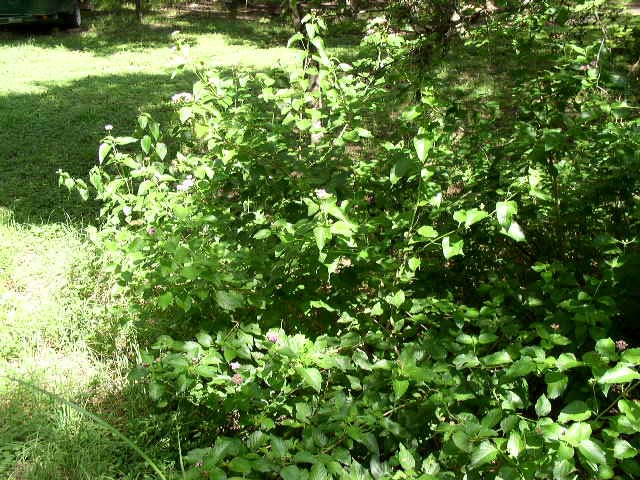 |
| Lantana camara in all its sneakiness. |
 |
| The effects of Lantana (black bars) in comparison to control areas (white bars) on the density and biomass of vegetation in northern India (Singh et al., 2014). |
However, all may not be as bleak as it seems.
Communities in southern India have found ways to incorporate the invasive plant into their livelihoods. People have been utilising Lantana for a range of activities including basket weaving, furniture construction and as fuel wood.
 |
| Various Lantana user groups and uses (1 Lantana stick collection by Madigas; 2 Lantana basket weaving by Irulas; 3 Lantana basket ready for sale; 4 Lantana sticks boiling by Soligas; 5 Lantana furniture making at MM hills; 6 Lantana sofa) Kannan et al (2013). |
 |
| Relative income sources for users and nonusers of Lantana (Kannan et al., 2013) |
From a human geography perspective (not a phrase I say often...) it's important to recognise that the use of Lantana was not instigated by external agencies (Kannan et al., 2013). This is a local solution. Communities have evolved their own processes and technologies to work with Lantana as a substitute for depleting bamboo species.
Over the course of this blog I've come across numerous management techniques, but this is the first locally developed management programme I have encountered. As the Lantana case shows, an invasive species 'problem' can lead to adaptive management. The locally developed solution is helping to tackle the invasive issue and also helping to alleviate poverty (Kannan et al., 2013) . Win win!
Over and out
The Invader Inspector
Shonil's blog 'Reflections on nature and culture', featuring some posts on invasive species as well as other environmental issues, can be read here
Sunday, 3 August 2014
Och aye the nooooo: Huge hornets in Scotland? | Bye bye British bees?
Giant versions of species are normally a staple of science fiction movies, be it a megashark, a giant octopus or a crocosaurus. However, an interesting story caught my eye the other day involving the potential sighting of a peculiar large creature.
According to a story in The Independent, a large, deadly hornet may have been spotted in Scotland. And, this blog being what it is, the hornet in question is, of course, an invasive species. So what's actually been going on?
Well, the piece tells the story of workmen in Fife who have reported seeing a creature 'two to three inches long' buzzing around them. Understandably, confronted by this beast, one of the workmen dealt with it using the sophisticated piece of insect removal equipment known as a 'hammer'.
The workmen believe that what they saw was Vespa velutina, or as it is more commonly known, the Asian Hornet.
However, Asian Hornets are only 3cm in size, which is considerably smaller than the dimensions of the bothersome buzzer reported by the Fife workmen.
Given this dimension disparity, and the fact that there have been no cases of Asian Hornets in the UK, it is believed that the workmen actually saw the larger Vespa Crabro, more commonly known as the European Hornet or Horntail.
So, the sighting of Vespa velutina in our lands may well have been a false alarm. However, it is considered a matter of when, not if, the Asian Hornet makes it to Britain. And when it does, it could be an invasive species with a considerable sting in its tail.
Originally from China, the Asian Hornet was accidentally introduced to France in 2004. Since then it has caused the deaths of six people. The population of Asian Hornets has grown rapidly and spread to other European countries including Spain, Portugal and Belgium (Monceau et al., 2014).
Though the deaths of six people is obviously a concern, a larger one may lie in the potential impact that the Asian Hornet could have on Britain's honeybees. Honeybees have been observed to constitute at least oa third of the Hornet's diet and one bee-keeper has reported losing 80% of his hives due to the Asian Hornet (Monceau et al., 2014).
With honeybees already facing a multitude of stresses, the introduction of this invasive to the UK would represent an unwelcome exacerbating factor. So what can be done?
Well, first and foremost it is of utmost importance that the arrival of the Asian Hornet is recognized quickly. Eradication would only be feasible in the earliest stages of its arrival.
Established Hornet's nests are costly and risky to destroy, with the process only deemed a success if every individual is destroyed (Monceau et al., 2014), which itself is hard to actually prove.
Other options include limiting the reproduction of the Hornet's and biological control. However, mating behaviour of the species is poorly understood and biological control using parasites could have negative impacts on other species (Monceau et al., 2014), making both of these suggestions far from ideal.
Clearly, the Asian Hornet could have a significant detrimental impact on Britain's apiculture. If you think you see one, maybe follow the example from the Fife workmen, grab your nearest hammer and go to town. However, also make sure you report it to the Non Native Species Secretariat!
Over and out
The Invader Inspector
 |
| Megashark attacking the Golden Gate Bridge. |
Well, the piece tells the story of workmen in Fife who have reported seeing a creature 'two to three inches long' buzzing around them. Understandably, confronted by this beast, one of the workmen dealt with it using the sophisticated piece of insect removal equipment known as a 'hammer'.
 |
| Just your standard piece of apparatus for insect annihilation... |
However, Asian Hornets are only 3cm in size, which is considerably smaller than the dimensions of the bothersome buzzer reported by the Fife workmen.
Given this dimension disparity, and the fact that there have been no cases of Asian Hornets in the UK, it is believed that the workmen actually saw the larger Vespa Crabro, more commonly known as the European Hornet or Horntail.
 |
| Queens of Vespa Crabro (right) and the smaller Vespa velutina (left). Source (Monceau et al., 2014) |
Originally from China, the Asian Hornet was accidentally introduced to France in 2004. Since then it has caused the deaths of six people. The population of Asian Hornets has grown rapidly and spread to other European countries including Spain, Portugal and Belgium (Monceau et al., 2014).
 |
| Map highlighting the spread of the Asian Hornet from 2004-2010. |
With honeybees already facing a multitude of stresses, the introduction of this invasive to the UK would represent an unwelcome exacerbating factor. So what can be done?
 |
| Hello hornet, bye bye bees? |
Established Hornet's nests are costly and risky to destroy, with the process only deemed a success if every individual is destroyed (Monceau et al., 2014), which itself is hard to actually prove.
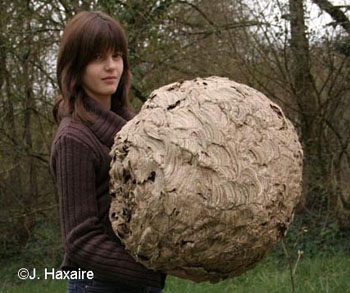 |
| A sizable Asian Hornet nest. |
Clearly, the Asian Hornet could have a significant detrimental impact on Britain's apiculture. If you think you see one, maybe follow the example from the Fife workmen, grab your nearest hammer and go to town. However, also make sure you report it to the Non Native Species Secretariat!
Over and out
The Invader Inspector
Monday, 9 June 2014
Invasive Snakes In London, What's The (H)issssue?
Welcome back again to Inspecting Invaders. It has been a while but, as you can see from the title, my ability to come up with awful attempts at humorous wordplay has not been abated. I now have plenty of time to get the blog up and running again so there'll be plenty more to come! But first, where better to start than the place I have been living for the last three years: London!
Now I'm willing to admit that when people think of London, invasive species are probably not in the firstfew thousand things that come to mind. But, like pretty much everywhere else, London is no exception to the spread and establishment of invasive species.
Now I'm willing to admit that when people think of London, invasive species are probably not in the first
 |
| London: A big bell, a big wheel and a big bridge but no sign of invasive species? |
The well known scientific publication, The Daily Star, recently produced an article entitled: 'Slither killer! Snakes capable of crushing small children are loose in Britain'. In the scientific opinion of 'Mum of three', Sylvia Taylor, the aforementioned snakes "could constrict small children”.
Wow! Sounds like there's real potential for a serious serpentine situation involving small kids being horrifically crushed to death! How terrible! Why don't more people know about this threat?!
Well maybe because it's just a random civilian making a comment which for some reason has become the headline of the article. Top stuff Daily Star. Sensationalism at its finest.
However, there is some truth to the article. Aesculapian Snakes are indeed residing in the Regents Canal area of Camden. The snakes originate in Central Europe but there is a theory suggesting they could have escaped from London Zoo. They are snakes after all, very cunning creatures...
 | |
| Aesculapian Snakes, such as the one above, have been spotted in Camden. |
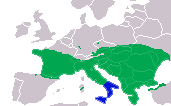 |
| The range of Aesculapian Snakes in Europe. Note the lack of colour in the UK. |
Most people that hang out around Camden are probably more preoccupied with drinking snakebite than actually being bitten by snakes. So should people be concerned?
Wellllll, sorry Daily Star, but I'm afraid your headline may have been slightly misleading. And sorry Sylvia, but according to Dr Wolfgang Wuster of Bangor University 'the snakes are perfectly harmless to pets and humans', and I'm more inclined to believe the guy with the PhD...
The snakes feature on a list compiled by the London Invasive Species Initiative (LISI) as a 'Species of Concern'. They are considered to be “Species of high impact or concern present at specific sites that require attention (control, management, eradication, etc.)”and it is noted that further research is required on the snakes' establishment, breeding sites and possible methods of removal.
 |
| A snapshot of some of LISI's species of concern |
There are no plans at present to remove the Camden population of the snakes so it seems like they could be slithering about for some time to come. But there is nothing to be concerned about. I'll leave you with some more from Dr Wuster:
“If your child is the size of a small rat they could constitute a
danger, but if that’s the case I’d suggest it being constricted by a
snake would be the least of your worries.”
Too true Wolfgang, too true
Over and out
The Invader Inspector
Thursday, 17 April 2014
Welcome Back | New EU Legislation on Invasive Species
Well this blog kinda slowed down totally stopped over the past few months. I guess that's what happens when you have a 12000 word dissertation to write. But now that that's all dealt with, I thought now is the right time to re-launch this blog.
As they say, a blog about invasive species isn't just for a 50% allocation of marks in a global environmental change module, it's for life.
Or is it dogs and Christmas they say that about?
In any case, something in the news caught my eye this week, namely new EU legislation on invasive species.
The legislation is set to become law within the next few months.
One thing that does seem a bit concerning is that although an 'unlimited list' of invasive species are to be tackled, no specification has been made as to what these species should be.
Will that lead to the wrong species being tackled? In my opinion some kind of priority listing would be beneficial rather than just saying, there's loads of em, work it out for yourselves...
I would go into more detail, but I have final exams coming up soon. As much as I'd love to read more into this legislation, sanitation issues in Africa are calling...
Over and out
The Invader Inspector
As they say, a blog about invasive species isn't just for a 50% allocation of marks in a global environmental change module, it's for life.
Or is it dogs and Christmas they say that about?
In any case, something in the news caught my eye this week, namely new EU legislation on invasive species.
The legislation is set to become law within the next few months.
One thing that does seem a bit concerning is that although an 'unlimited list' of invasive species are to be tackled, no specification has been made as to what these species should be.
Will that lead to the wrong species being tackled? In my opinion some kind of priority listing would be beneficial rather than just saying, there's loads of em, work it out for yourselves...
I would go into more detail, but I have final exams coming up soon. As much as I'd love to read more into this legislation, sanitation issues in Africa are calling...
Over and out
The Invader Inspector
Monday, 13 January 2014
Inspecting Invaders: The Finale
Today is a sad day, for it marks the final stage of the Inspecting Invaders journey. We've had 21 posts along the way. There have been highs and there have been lows. Some witty titles and some terrible, terrible jokes. Overall though, I feel like a completely different person from when I came into this process...
...what do you mean this isn't the X Factor? I'm emotional ok...
At the start of this blog, I set out to explore the impacts that invasive species have had within the context of environmental change. Though, quite frankly, I'm surprised anyone continued to read after my introductory ramble.
We've looked at everything from squirrels to invasive ghost fish, how we used to be invasive species and now, how we manage them. There have been problematic invasive species pretty much on my doorstep and on the other side of the world. Heck, there was even a quiz in there somewhere.
What have I gathered from writing this blog? Well, it may seem obvious but I'm going to reinforce it. Invasive species are a large concern in a variety of ecosystems; they have been in the past and will continue to be in future, as our global environment continues to change.
The funky wordle below also summarises the blog pretty well. Unsurprisingly, the words 'invasive' and 'species' feature heavily, so clearly (and fortunately) myoccasional frequent rambles didn't detract from the focus too much.
 Other larger words include the brothers in arms 'et' and 'al', given the group nature of academic research. 'Change', 'impacts' and 'spread' also stand out, perhaps due to the fact that environmental changes can often be key facilitators of invasive species introductions to new areas and their expansion.
Additionally, the words 'negative' and 'positive' are both present in the wordle, highlighting the fact that invasive species do not always have adverse effects within a given environment.
Where invasive species rank in terms of other issues our planet is facing is open to debate, but having read about their very serious consequences, in certain cases we should be very concerned indeed.
I have very much enjoyed writing this blog and I've learnt a lot at the same time. I hope you've found it interesting and enjoyed reading it too.
Over and out (and this time I mean it)
The Invader Inspector
...what do you mean this isn't the X Factor? I'm emotional ok...
 |
| It's been a long road... but we got there. |
We've looked at everything from squirrels to invasive ghost fish, how we used to be invasive species and now, how we manage them. There have been problematic invasive species pretty much on my doorstep and on the other side of the world. Heck, there was even a quiz in there somewhere.
What have I gathered from writing this blog? Well, it may seem obvious but I'm going to reinforce it. Invasive species are a large concern in a variety of ecosystems; they have been in the past and will continue to be in future, as our global environment continues to change.
The funky wordle below also summarises the blog pretty well. Unsurprisingly, the words 'invasive' and 'species' feature heavily, so clearly (and fortunately) my

Additionally, the words 'negative' and 'positive' are both present in the wordle, highlighting the fact that invasive species do not always have adverse effects within a given environment.
Where invasive species rank in terms of other issues our planet is facing is open to debate, but having read about their very serious consequences, in certain cases we should be very concerned indeed.
I have very much enjoyed writing this blog and I've learnt a lot at the same time. I hope you've found it interesting and enjoyed reading it too.
Over and out (and this time I mean it)
The Invader Inspector
Subscribe to:
Posts (Atom)